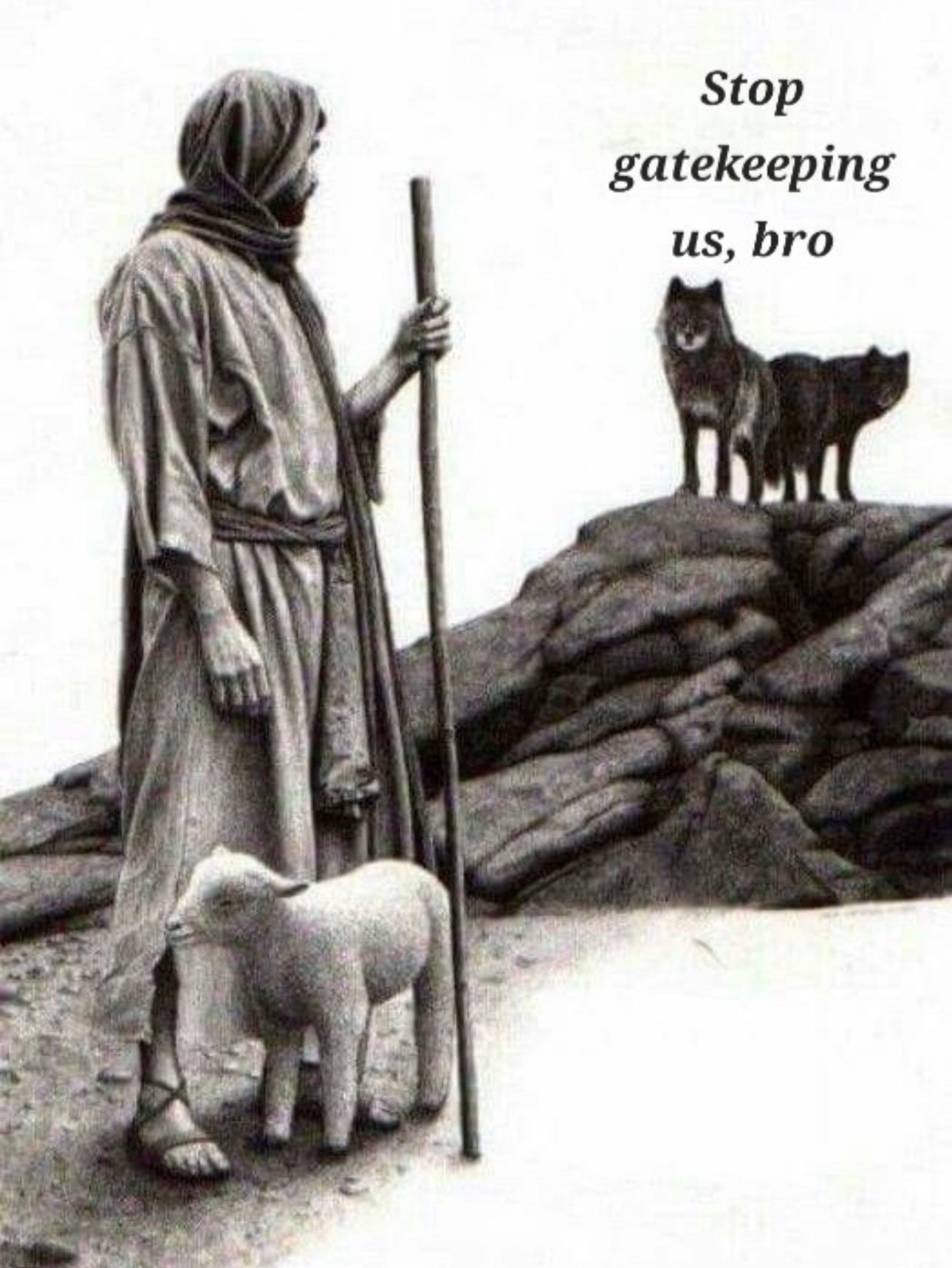
Why Deconstructors Aren’t Christians
Day 17 Of The Shred: Judgement And Salvation In Isaiah

Look, there are a lot of reasons why Deconstructors aren’t Christians.
And I have to say it that bluntly because their current move is to self-identify as Christian while delivering political commentary with a cross necklace as stage prop. You’ve seen the reels: “A Christian response to ICE raids…” and the content has absolutely no resemblance to historic Christian belief. At some point you’re allowed to say, politely but firmly: that isn’t Christianity, David Koresh.
Now—Isaiah. Because Isaiah solves this whole confusion if you’ll actually read him.
Isaiah has one sweeping theme running through the entire book, and once you see it, you can’t unsee it:
Judgment and Salvation.
He tears Israel down, exposes her illusions, names her sin—and then, almost mid-breath, God says, “Comfort My people.” The same voice that wounds is the voice that heals.
Isaiah 6 sets the tone. Isaiah sees God and immediately becomes aware of his own specific sin. Not generic guilt or vague shame. Particular rebellion. In his case, his mouth. He knows exactly where he goes off the rails. And the Spirit doesn’t convict him of something abstract; He convicts him at the precise fracture line of his character. Isaiah is the navy seal of having a potty mouth, and he knows it.
Then comes the twist: the very organ of his failure becomes the instrument of his calling. The mouth that sinned becomes the mouth that prophesies. That’s salvation.
But the order matters:
Judgment first.
Salvation second.
You don’t get one without the other.
And this is where Deconstruction quietly steps outside the faith. Not because of doubt. Doubt is human. But because it rejects the category of sin altogether. If you are only ever a victim of forces outside yourself, you never stand in the place where Isaiah stood. You never say, “Woe is me.” And if you never stand there, you never experience cleansing.
Christians are not people who repented perfectly. Most of us will die in the process of repenting. The difference is simpler: Christians have agreed with God about themselves. They fail in the direction of heaven. They call sin what it is. They don’t rename it. They don’t aestheticize it. They don’t outsource it to therapeutic euphemism or chalk it up to some trauma that was done to them.
Because God does not forgive what we refuse to acknowledge.
Of course there are sins we never see—blind spots, omissions, ignorance. The blood of Christ covers that. But what the Spirit places His finger on through the Word must be named. Owned. Brought into the light.
When a movement silences that voice—when it denies the Spirit the right to define sin—it doesn’t just drift from Christianity. It sins against the Holy Spirit by gagging Him.
And leading others down that path is not harmless exploration.
It carries weight.
Isaiah would call it grave.
Jesus would call it the millstone business.
Reading Isaiah as a Pentecostal is pretty fascinating because there is so much in here. Isaiah is the Romans of the Old Testament. I once heard N.T. Wright suggest that Isaiah 40 and onwards was like the core teaching of the New Testament church—another thing that, once you see, you can’t unsee.
Here are some reading tips to help you absorb everything going on instead of feeling like you just bought tickets to a musical in Chinese: